
Neil Sedaka, RIP
For pop hitmaker Neil Sedaka, Yiddish always bubbled beneath the surface

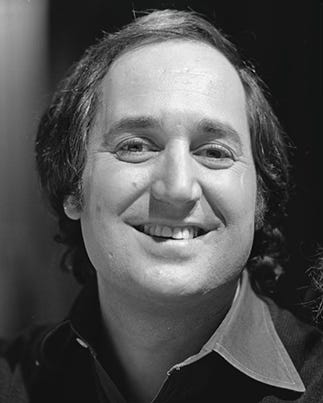
This article is largely based on an interview the author conducted with Neil Sedaka for Hadassah Magazine in 2007. The singer and songwriter died on Friday, February 27, in Los Angeles. He was 86.
AT HIS BAR MITZVAH, the elders at Temple Beth-El in Manhattan Beach, Brooklyn, pegged the sweet-voiced countertenor as a potential cantor. And as something of a child prodigy, he was groomed from an early age for a career as a concert pianist.
The world had other plans for Neil Sedaka, however. Like many teenagers in the 1950s, he was seduced by the new sounds on the radio, and by the turn of the decade, those sounds included his Top 10 hits such as “Calendar Girl,” “Oh! Carol” (written for Carole King, née Klein, a teenage girlfriend) and “Breaking Up Is Hard to Do.” By the early 1960s he was an international pop star.
When I visited Sedaka in 2007 in the cozy but elegant den of his luxury Manhattan apartment — just a subway ride away from the two-bedroom, one-bathroom home he shared with 10 other family members while growing up — Sedaka reflected on the long journey to Park Avenue.
“I never forgot my roots,” said a trimmed-down, compact version of the formerly hefty pop star, relaxing in a peach-colored sweatshirt, gray sweatpants, and white sneakers. “That’s what kept my sanity. I never took anything for granted.”
In fact, Sedaka visited Brooklyn once a year, to recapture the taste of a Nathan’s hot dog, to ride the Cyclone roller coaster, and to walk the old neighborhood streets — including one on Coney Island’s boardwalk that now bears his name. More than a walk down memory lane, he went back to remind himself of where he came from.
Sedaka still spoke in the cadences of his native town, albeit in a soft, dulcet tone — the spoken-word version of his pure, androgynous singing voice. Despite a little gray around the temples, he seemed childlike, boyish, with a hint of the cuddly, teddy bear nature that originally attracted girls to the teen idol in the late-1950s and early-1960s.
Descended from East European Jews on his mother’s side and Turkish Jews on his father’s, Sedaka was born in March 1939 to Mac and Eleanor Sedaka. (The name is Ladino for tzedaka.) Although his family was not religious, his earliest memories include attending a Sephardic synagogue with his paternal grandmother, a native of Istanbul, and listening to Ladino tunes on 78 rpm records that she called placas.
His father was a Brooklyn cabdriver, a sweet, gentle man who took his son to the fights — he was an amateur boxer himself — and to Ebbets Field to see the Dodgers. But when Neil showed promise at the piano, all the family’s resources went toward his lessons. By age nine, he was accepted to Juilliard Preparatory, and his father rode the subway with him every Saturday to Harlem, where the school was then located.
He excelled at the piano and was named one of the best New York City high school pianists in his senior year by Artur Rubinstein for classical radio station WQXR. While his musical success pleased his mother, who fancied her son a concert pianist and music teacher, it didn’t win Sedaka many points among his peers.
“I was a bit of a mama’s boy,” said Sedaka, who at the time of my visit was married for over 40 years to his teenage sweetheart, the former Leba Strassberg, who was also his manager. “And I was not popular in school. I was not a jock and I was not invited to the parties. I went to a tough school, [Abraham] Lincoln High School, and I was made fun of because every time the film broke in the auditorium, they asked Neil to play Chopin. And I was ostracized for it.”
Reliving that adolescent trauma, Sedaka — the father of Marc, a screenwriter, and Dara, a jingle singer — thinks his desire to overcome that feeling of alienation from his peers is what pushed him toward pop music.
SO HE BEGAN LEARNING the rock ’n’ roll tunes that were the soundtrack to teenage life. “When my mother heard me playing rock ’n’ roll she was a bit shocked,” said Sedaka, who started writing songs with his long-time lyricist, Howard Greenfield, in 1952. “I would have to wait until she [went] shopping to write the rock ’n’ roll, because it would take away from the classical practice.”
There was little arguing with success, however. In just a few short years, the teenage songwriting duo began placing songs with rhythm-and-blues artists on New York-based Atlantic Records, including Dinah Washington, LaVern Baker, and Clyde McPhatter. By the time Connie Francis took her version of their song, “Stupid Cupid,” to Billboard’s Top 20 in 1958, Sedaka’s budding career as a classical pianist — after high school he briefly attended conservatory at Juilliard — was over.
“It was wonderful to be able to play the Waldstein piano sonata, but it was more exciting to be able to write and sing my own songs as a ‘musical ambassador,’” said Sedaka. His background in classical music, however, served him in good stead as a pop composer, according to one early music partner.
“Neil wrote melodies that were not so ordinary,” said Jay Siegel, who in 1955 joined Sedaka’s high school doo-wop group, the Linc-Tones (named after their school). “Mostly every song on the radio back then had either three or four chords. Neil would add a fifth chord, or a bridge in the middle part, that would make it completely different,” explains Siegel, who went on to achieve fame with The Tokens, enjoying an international hit with “The Lion Sleeps Tonight” in 1961. “It wasn’t just regular rock ’n’ roll. That was the Sedaka touch that made them different from all other songs.”
In the 1960s, Sedaka performed several times in Israel — at kibbutzim as well as in Tel Aviv, Jerusalem, and Haifa — and he recorded a few albums in Hebrew.
But almost as quickly as chart-topping success came to Sedaka — he enjoyed over a dozen Top 40 hits from 1958 to 1963 — it all came to a crashing halt with Beatlemania and the subsequent “British Invasion” of 1964, consigning teen idols like Fabian, Bobby Rydell, Bobby Darin, and Sedaka to the rock ’n’ roll equivalent of Siberia.
IT WOULD BE 10 YEARS before he would have another hit. But when he did, aided by an influential fan and record-label honcho named Elton John, Sedaka enjoyed a rare, full-fledged second act, with another string of hits released on John’s label, Rocket Records, including “Laughter in the Rain,” “Bad Blood,” and a new version of “Breaking Up Is Hard To Do,” sung as a ballad. He also wrote a touching tribute to his immigrant forebears in an unfortunately still-relevant song, “The Immigrant.”
When I visited Sedaka in 2007, he had enjoyed over 20 Top 40 hits as a singer and countless more as a songwriter. By then a grandfather, Sedaka had reached the point where he could choose projects based solely according to his own creative wishes. “I’ve had many successful things over the years,” he said, gesturing to the wall behind him plastered with a dozen or so gold and platinum records, each signifying sales in the millions.
In the early 2000s, he returned to his Juilliard roots and recorded Classically Sedaka, an album of original lyrics set to the music of Beethoven, Chopin, Rachmaninoff, and Tchaikovsky. He followed that with Tales of Love and Other Passions, an album of pop standards recorded with a jazz trio. But another of Sedaka’s projects at the time may have been the one dearest to his heart.
“My mother played a lot of Yiddish records, including the Barry Sisters, and I loved them,” Sedaka says. “We used to go on family picnics, and on the bus we would play the ukulele and all the family would sing ‘Sheyn Vi Di L’Vone’ and ‘Mayn Shtetele Belz.’”
“I always wanted to record these songs,” says Sedaka about the Yiddish theater and folk songs on Brighton Beach Memories: Neil Sedaka Sings Yiddish, including the popular standards “Bei Mir Bist Du Shein” and “Tumbalalaika.”
The album also included the song that fueled the only episode of anti-Semitism he ever witnessed in show business. Early in his career, “My Yiddishe Mamme” was part of his regular act, a “real showstopper,” he says. After rehearsing the song for an appearance on The Ed Sullivan Show, word came back that the host didn’t want Sedaka to sing it.
“He heard the rehearsal and he said, ‘I don’t want a Jewish song on the show,’” said Sedaka. “I felt awful. My manager made such a fuss with the producer that, come airtime, they allowed me to do it.” Sedaka does a pitch-perfect imitation of Sullivan introducing him on the show — “Neil, won’t you do, uh, ‘Yidish-er Mam-er’?” Clearly the song title did not sit well in Sullivan’s mouth.
Vocalist Lorin Sklamberg, the lead singer for The Klezmatics, who performed and recorded with Sedaka, says he hears echoes of songs like “Vi Ahin Zol Ich Geyn,” which leads off Brighton Beach Memories, in some of Sedaka’s early hits, like “You Mean Everything to Me.”
“It definitely sounds similar, and it turns out it was his mother’s favorite song,” says Sklamberg.
Zalmen Mlotek, artistic director of New York’s National Yiddish Theatre Folksbiene, said, “You can’t help hearing something Jewish in the way the melody rises” in Sedaka’s songs. He illustrated the point by singing “Breaking Up Is Hard To Do” with an unmistakable Yiddish inflection.
Or as Frank London, trumpeter/keyboardist for The Klezmatics, put it after a rehearsal with Sedaka, “The amazing thing about Neil Sedaka singing Yiddish is that he sounds like, well, Neil Sedaka.”
Sedaka confesses to feeling out of his element. “I am a little nervous about it, doing 45 minutes in Yiddish for the first time with a new band,” he confides. “But it’s very exciting being a New York Jew and doing my heritage. And I’m very proud of it.”
In solidarity,
“Well, I don’t want to go on the roof.” -- George Harrison

Hey, did you like this edition of Everything Is Broken? If so, please consider clicking on the “LIKE” button at the very end of this message. It matters to the gods of Substack.
Roll Call: Founding Members
Anne Fredericks
Anonymous (9)
Susan Bang
Erik Bruun
Jane & Andy Cohen
Jeffrey N. Cohen
Nadine Habousha Cohen
Fred Collins
Ian Feldman
Fluffforager
Benno Friedman
Amy and Howard Friedner
Jackie and Larry Horn
Richard Koplin
Paul Paradiso
Steve and Helice Picheny
David Rubman
Spencertown Academy Arts Center
Elisa Spungen and Rob Bildner/Berkshires Farm Table Cookbook
Julie Abraham Stone
Mary Herr Tally
Daniel Wollman and Debra Pollack
Great piece, Seth. Thanks for explaining his Sephardi last name. But how many verses would he need to write to have enough lyrics for Beethoven's 5th?
I remember hearing Breaking Up Is Hard To Do for the first time. It was on a Detroit AM station ( most likely CKLW, which we considered a Detroit station). I knew about Elvis and Chuck and Motown by then, but BUIHTD was the one I've always remembered, and loving it immediately.